
We'd love to hear from you
You can also chat with us or call (949) 450-0202

How One Waterfront HOA Navigated SB 326 and a $1.2M Renovation
A Huntington Beach waterfront HOA faced years of deferred maintenance, fragmented management, and new SB 326 safety requirements. See how Portofino Cove unified operations, secured funding, and launched a $1.2M structural renovation.
For those who enjoy coastal living, it’s hard to imagine a more ideal setting than one that invites residents to walk out the door, cross a short boardwalk, and enter a scenic harbor. For the people who call Portofino Cove in Huntington Beach, California home, that is exactly the lifestyle they enjoy.
With a private harbor adjacent to the condominium complex, 47 homeowners have access to their own boat slips just a short walk away.
Since its official opening in 1985, the leaders of this unique community have faced several challenges. With a master association serving as an umbrella for three sub-associations and multiple management companies holding contracts for those HOAs, a cohesive approach has been difficult to achieve. As a result, maintenance tasks were regularly overlooked and the 40-year-old property started to show signs of deterioration.
When Action Property Management came on board in 2024, the team started with two primary goals — to unify all the entities under one management company and to ensure that the building and its residents remained safe.
In 2019, SB 326 was passed by the California legislature in response to a catastrophic balcony collapse in Berkeley, California that killed six people. According to the law, condominium HOAs with more than three units had until January 1, 2025 to inspect all elevated walkways and balconies. The goal of this legislation was to identify hidden wood rot and water intrusion in aging structures in an effort to prevent future catastrophic incidents.
As those inspections and others were completed at Portofino Cove, several problem areas were identified. Of greatest concern was a third-floor walkway. Additionally, repairs have been scheduled for the second-floor walkway, entrances to stairways, and the railing on Portofino Cove’s iconic boardwalk.
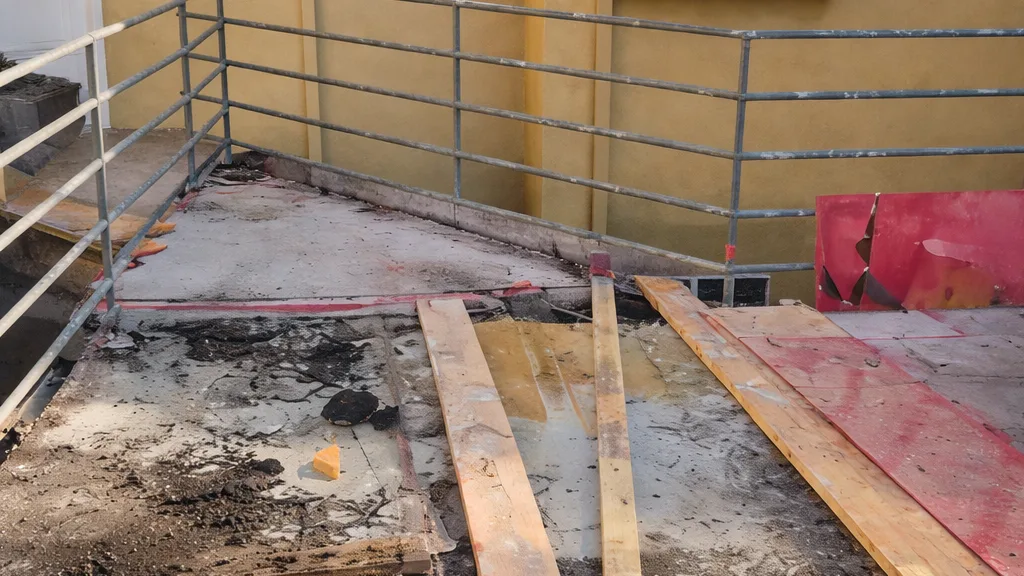
Because the previous management company had failed to set aside adequate funding for maintenance, Action’s Senior Portfolio Community Manager, Paul Stimmler set out to generate the funds needed to ensure the building was structurally sound. To accomplish this, the HOA agreed to a $20,000 per unit special assessment. This funding, in addition to previously earmarked funds, would be enough to begin the process, and future assessments were scheduled to bring the project to completion.
The $1.2 million update is now in the exploratory demolition phase with primary renovation set to be completed by the third quarter of 2026.
Alan Lippincott, the current Board President, has lived at Portofino Cove since 2020. When he and his wife moved in, it was their first experience living in a condominium, but the breathtaking views and access to the harbor were more than enough to sell them. He was quick to get involved in community leadership and soon realized there were issues that needed to be addressed.
Alan credits the leadership of both Paul and his predecessor at Action, Rhonda Hart, for bringing such a monumental project to fruition. Reflecting on the progress that’s taking place around him, he remarked, “Action has been very helpful with structuring these projects. We couldn’t have done it without them.”
PrimeCo, the contractor responsible for ensuring that the work is done safely, has played a crucial role in the process. Given that the project thus far centers on repairing a third-floor walkway, access to individual units could easily become limited. PrimeCo workers have not only maintained a clean environment, but have also been diligent about erecting barriers, supports, and temporary coverings to ensure that residents can safely access their homes each day.
While the renovations to Portofino Cove are complex and, at times, overwhelming, the HOA is not alone in this process. Buildings across the state continue to implement improvements based on the findings of their own inspections. As a result of collaboration between the state legislature, contractors, HOAs, and their management companies, older buildings throughout California are becoming safer by the day.


Related Posts
Check out our podcast library
Check out podcast



Suite 200
Irvine, CA 92602